
Environment
Borrowdale residents welcome Operation Chenesa progress
The BRRA is also actively funding local infrastructure repairs. The association is currently fixing a bus stop shelter along Liberation Legacy Way next to TotalEnergies Helensvale, which was previously destroyed in a bus accident. The area behind the shelter, which had been occupied by informal traders, is now earmarked for aesthetic upgrades.


By Albert Masaka
THE BORROWDALE Residents and Ratepayers Association (BRRA) has welcomed recent environmental and structural improvements at shopping centres in Harare’s affluent suburb, attributing the progress to “Operation Chenesa Harare”—a government-backed urban clean up and anti-vending blitz in Zimbabwe’s capital.
The government initiative being carried out by the City of Harare aims to remove illegal street vendors, dismantle unauthorised roadside and pavement structures, clear informal markets from the Central Business District (CBD), and address pressing public health and congestion issues.
BRRA Chairman Robert Mutyasira last week said that association representatives were recently invited by local council officials to conduct an assessment tour of the area’s shopping centres. During the tour, Mutyasira implored business operators to strictly adhere to municipal by-laws.
“We are pleased to see improvements at our shopping centres, and we wish to commend the ongoing ‘Operation Chenesa Harare’ as a positive move towards restoring the glamour of our city and neighbourhoods,” he said.
“On the local front, our councillor, regional manager, district officer, and their teams are working frantically to ensure the attained standards are maintained,” he added. “Just yesterday, they invited us as they went around shopping centres compelling complex and shop owners to adhere to by-laws, maintain buildings, replace signage, and clean up their immediate environments. It was disturbing to see how shop owners expect to conduct business in such filthy conditions.”
Following the tour, Mutyasira said his association has lodged an appeal with the local authority to allocate designated marketplace zones for vendors in Glen Lorne and Helensvale. The move aims to minimise the risk of informal traders resurfacing on street corners and roadsides.
“For the benefit of our communities, and if such market spaces are allocated, it may be necessary to crowd-fund for the construction of markets suitable for our neighbourhood.”
The BRRA is also actively funding local infrastructure repairs. The association is currently fixing a bus stop shelter along Liberation Legacy Way next to TotalEnergies Helensvale, which was previously destroyed in a bus accident. The area behind the shelter, which had been occupied by informal traders, is now earmarked for aesthetic upgrades.
“A new occupant has been identified, and plans are underway to secure their occupancy. The Roads, Traffic and Transportation departments from the City of Harare are also expected to move in soon to improve the surroundings and regulate traffic, especially at Helensvale,” Mutyasira said.
Looking ahead, the BRRA chief advised residents that on the first Friday of November 2026, the association will spearhead an initiative to pull down all unauthorized real estate and advertising signage along roads and street corners, coinciding with national clean-up activities.
“If your area is infested with these unsightly and distracting materials, please notify us well before the date,” Mutyasira urged. “Assistance from residents is welcome as we need transport and labour, while the municipality will provide oversight and security.”


Breaking News
Parly supports environmental journalism
“And let us work together to ensure that the stories that you tell inspire action and drive meaningful change”
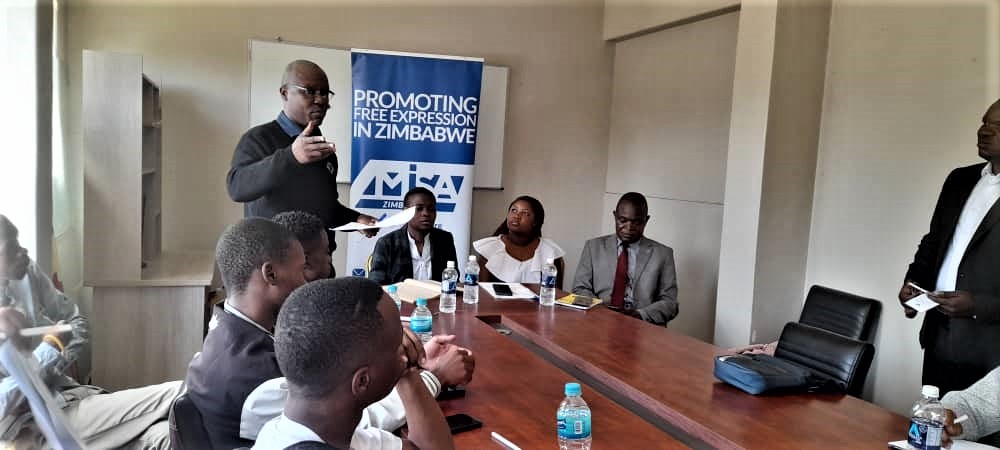
By ALBERT MASAKA
ZIMBABWE’S Parliament has made tremendous strides in its support to press freedom and environmental journalism in particular, as evidenced by the number of legislation passed and that which is still before the august House.
Chitungwiza South Member of Parliament Maxwell Mavhunga said this today in a speech that he presented on behalf of Parliament at the belated World Press Freedom Day commemorations hosted by Misa-Zimbabwe in Harare.
The event that was held under Misa’s localised theme ‑ Positioning the media to amplify the environment story for a sustainable future.
Mavhunga said that Parliament will work hard to create an enabling environment for journalists to do their work without fear or favour.
“This includes strengthening our legal frameworks to protect press freedom, investing in journalism training programs, and fostering a culture of transparency and accountability.”
He added that there was need to encourage innovation in environmental journalism and support efforts to adapt to the changing media landscape.
“As we commemorate World Press Freedom Day, let us renew our commitment to protecting and promoting press freedom.
“As legislators we stand with journalists who risk their lives to uncover the truth and shine a light on the environmental crisis.”
“And let us work together to ensure that the stories that you tell inspire action and drive meaningful change”
He said that this year’s theme, “Journalism in the Face of Environmental Crisis,” was not only timely but also crucial in navigatind the complex and often perilous terrain of environmental challenges.
“The role of journalism in highlighting environmental issues cannot be overstated. Journalists around the world are on the front lines, documenting the effects of climate change, deforestation, pollution, and biodiversity loss.”
The media exposes and holds governments and corporations accountable by giving a voice to those most affected by environmental degradation, he said.
“In our own country, the onus is upon us to ensure that journalists have the freedom and safety to report on environmental issues.
“We must support media organisations in their efforts to investigate and report on these critical topics.
“This includes providing adequate funding for public-interest journalism, ensuring access to information, and protecting journalists from legal and physical threats.


President Mnangagwa calls on Africa to promote value addition, mineral beneficiation

Borrowdale residents welcome Operation Chenesa progress

Mash East woos investors in Mozambique


-
 Community Feedback Page2 years ago
Can real estate agents, developers be councillors?
-

 Health and Wellness3 years ago
Leaked nudes: Traumatic impact, healing pathways
-
 Tourism3 years ago
Antelope Park joins White Rhino fight
-
 Breaking News2 years ago
Zim Community Trailblazers Awards (ZCTA) Call for Entries (5th Edition)
-
 Breaking News2 years ago
President Mnangagwa approves Starlink Zim operations
-
 Entertainment5 years ago
Charambas ZCTA maiden winners
-

 Faith3 years ago
Byo woman walks after 27 years
-
 Breaking News2 years ago
Fly Emirates To Dubai This Summer and Unlock Exclusive Offers Including Access To The City’s Most Exciting Experiences