
Politics
Breakdown of peace leaves us all losers: Chamisa
“We have committed to a peaceful resolution of disputes and intend to exhaust all available peaceful remedies. As you are all aware, millions of you agree with this approach.


OPPOSITION politician Nelson Chamisa has reiterated his commitment to a peaceful solution to Zimbabwe’s political stalemate including engaging President Emmerson Mnangagwa as meaningful progress was impossible on the back of disunity and successive disputed national processes including contested elections.
Chamisa said Zimbabwe was too beautiful and precious to be destroyed by flames of political disputes under his watch.
“Our beautiful country can never progress on the back of disunity and successive disputed national processes including contested elections.
We are acutely aware of the urgency of this matter and more importantly that there can never be any talk of 2028 or a viable and stable future for this country without resolving August 2023, the broken past, and disputed politics.
Chamisa said that there can never be any talk of future elections or a viable and stable future for this country without resolving the disputed August 2023 poll.
“It remains our hope and indeed your hope that all these concerns will be addressed with urgency and seriousness.
He said the peaceful route he had taken to seek all available remedies to resolve national issues was not a sign of weakness or a lack of other ideas and means but a strict commitment to amicably resolve the conflict.
“We have committed to a peaceful resolution of disputes and intend to exhaust all available peaceful remedies. As you are all aware, millions of you agree with this approach.
“On my part I am doing everything necessary, to the extent of God’s Will, to seek a lasting solution to the perennial challenges affecting our beloved country.”
He said has engaged all the stakeholders including the traditional and business leadership, civil society, political parties and the diplomatic community.
“In particular, I have also sought the mediatory role of the church leadership to help resolve the disputed elections and contested national processes, albeit, with handicapped progress.
I have even numerously efforted engagement with the other presidential contender and he is aware of our point of dispute and the proposed way forward. We have also developed and shared our roadmap with all key stakeholders, which paper we are ready to make public in due course.
“I therefore urge you to take an active role in peacefully determining the destiny of our country. I exhort you, fellow citizens, the intercessors, and the church, to continue to pray for a smooth and peaceful transition in our country. Stay the course, hold the fort, hold fast and stand involved. Stand ready. Change is upon us.”


Comment
Zanu PF Chinhoyi 2026: Constitutional order vs. Grassroots results
If ZANU PF translates its consolidated political roadmap into localised, measurable socio-economic results—ensuring accountability, infrastructure durability, and economic empowerment—the resolutions passed at Chinhoyi University of Technology will mean genuine progress for the Zimbabwean public.
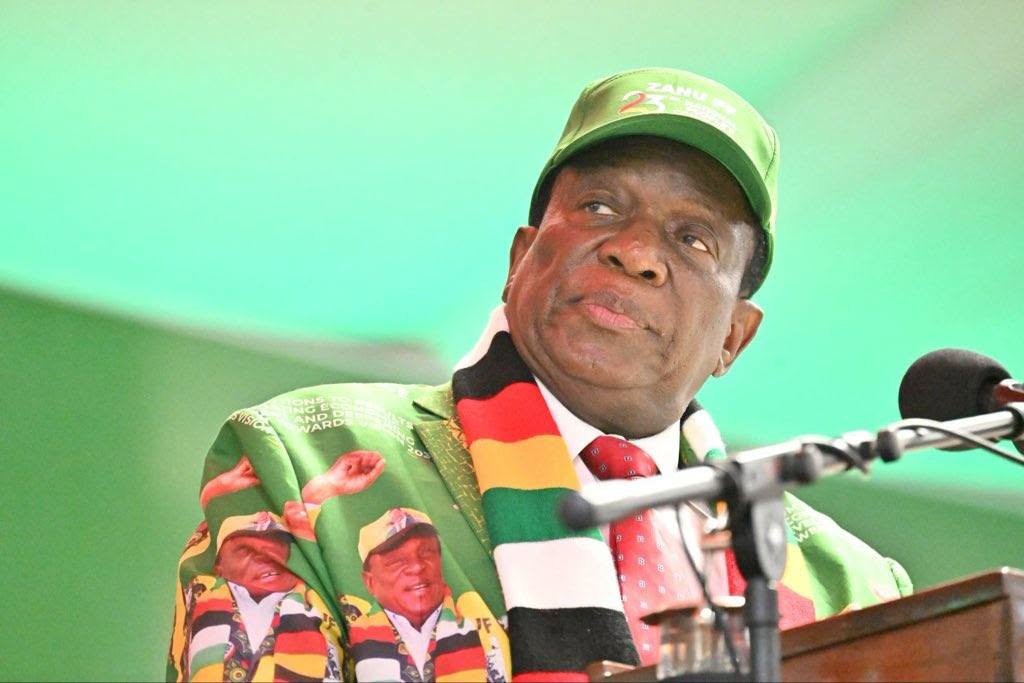
As the ruling party since independence in 1980, ZANU PF’s internal dynamics are never just party matters; they have a direct, heavy bearing on the daily lives of ordinary communities.
When the party sneezes, the whole nation catches a cold.
Therefore, the outcomes of the party’s 2026 Chinhoyi conference warrant close, community-centred analysis.
On April 28, 1966, seven ZANLA fighters held off a Rhodesian force at Hunyani River.
ZANU PF marks it as the first shot of the Second Chimurenga.
Sixty years later, the party returned to Chinhoyi University of Technology for its 23rd National People’s Conference with a theme that is now more than a slogan: “From Resolutions to Results: Consolidating Economic Development and Deepening Economic Empowerment Towards Vision 2030.”
In his keynote address, President Mnangagwa took the opportunity to reflect on the significant milestones achieved by the Second Republic since he assumed office.
He aggressively defended his administration’s track record, pointing to major domestic breakthroughs in food security through revitalised climate-proofed agriculture, massive infrastructure rehabilitation projects like the Harare-Masvingo-Beitbridge highway, and an unprecedented expansion in mining output.
Crucially, the President anchored his address on the visible gains of his foreign policy doctrine: “Friend to all and enemy to none.”
He highlighted how this diplomatic re-engagement strategy has successfully unlocked critical economic partnerships have broken years of diplomatic isolation.
For ordinary communities, these are not just abstract international trips.
The President emphasised that this shift has directly driven foreign direct investment into local lithium mining, consolidated heavy industrial manufacturing, and opened fresh export markets for Zimbabwean agricultural produce.
By positioning Zimbabwe as an active, pragmatic global partner, the administration argued that it is actively building the macroeconomic foundation necessary to sustain local livelihoods.
Yet, inside the conference halls, the political trajectory required equal focus.
In one morning, the party leadership gave the nation two speeches that, if read together with maturity, give ZANU PF a cohesive way forward.
President Emmerson Mnangagwa, as President and First Secretary, gave direction and discipline:
“MuZANU PF hamudi zvemazvake mazvake. Tinofanira kufamba tose, takabatana uye tiine gwara rimwe. There is no room for solo efforts or dividing our focus – neither lagging behind nor running ahead out of step.”
Vice President Rtd General Dr Constantino Chiwenga, gave reflection and conscience:
“Chii chakaita kuti Second Republic ivepo? Kwaive kugadzirisa zvakaipa zvanga zvichiitika kumashare. Hatisi kudzokorora here kuita zvatakambotadza? Change is inevitable. It must be orderly, entrenched in our party structures and guided by our Constitution. Change must be driven by the people, not imposed from above. You may recall, Your Excellency, that the voice of the people is the voice of God.”
Together, they answer four questions Zimbabweans are asking: the history of how we got here, the whispered 2017 promises of structural corrections, and the constitutional path forward regarding succession.
The final political outcomes of the conference effectively answered Vice President Chiwenga’s insistence on an orderly, legalistic approach before the resolutions were even set in stone.
By passing a consensus resolution to defer the elective congress from 2027 to 2029, the party avoided the chaos of abrupt factional re-alignments.
Instead, delegates chose to align internal party structures directly with the Constitutional Amendment Act Number 3 (CAA3), extending President Mnangagwa’s leadership tenure to 2030 through legal mechanisms rather than ad-hoc decree.
In addition, the official decision to extend the internal electoral cycle from a five-year to a seven-year term provides a predictable framework from the cell level up to the Central Committee.
This structural change satisfies the demand for order and constitutional discipline, ensuring that change is not a disruptive shockwave but an institutionalised evolution.
Crucially, the way these outcomes came about directly addressed Chiwenga’s warning that change must be driven from below rather than imposed from above.
President Mnangagwa took the stage to defend the intense internal friction and divergent views that characterised the lead-up to Chinhoyi.
Rather than dismissing these competing provincial interests, the President described open internal debate as healthy for party unity and progress.
By allowing these passionate debates to play out transparently across the party structures before adopting a common consensus, the leadership demonstrated a commitment to letting the grassroots voice speak.
This acknowledgment of divergent views signals that the party recognises the risk of top-down imposition, choosing instead to anchor its decisions in the collective will of the structures.
For our local communities, the true test of Chinhoyi 2026 lies in whether this orderly political roadmap can translate into tangible performance, mirroring the conference theme.
While the conference generated short-term economic booms for Chinhoyi’s local hospitality, transport, and informal trading sectors, the lasting impact must be measured by enduring grassroots development.
The concurrent commissioning of a new oxygen plant and a solar power system at Chinhoyi General Hospital, alongside upgraded student accommodation at the university, serves as a template for what community impact should look like.
Beyond politics, the economic resolutions passed at Chinhoyi hold massive implications for ordinary citizens.
The party issued strict directives to expedite the issuance of offer letters and title deeds to resettled farmers, a move that could unlock crucial agricultural credit lines and boost local food security.
Simultaneously, directives to enforce the “use it or lose it” policy on mining claims and to accelerate localised mineral beneficiation mean that communities surrounding resource-rich areas could finally see corporate social responsibility turn into real local employment and infrastructure development.
However, the local community remains wary of the implementation gap.
If ZANU PF translates its consolidated political roadmap into localised, measurable socio-economic results—ensuring accountability, infrastructure durability, and economic empowerment—the resolutions passed at Chinhoyi University of Technology will mean genuine progress for the Zimbabwean public.
If not, the community risks being left behind by an establishment more focused on positions than actual production.
The mandate is clear: the speeches have been synthesised, the constitutional timeline is set, and the community now awaits the delivery.
Breaking News
Charamba dismisses ‘Icarus’ audios
‘No one should incite Government into breaking the law by diminishing ZEC’s status as a legal persona’

PRESIDENT Emmerson Mnangagwa’s spokesperson George Charamba has distanced his principal and government from leaked audios connected to Wicknell Chivayo, by insinuating that the offensive name-dropping could have been a way to scare away other business partners following a fallout.
In the audios, a voice that is alleged to be that of Chivayo is bragging to have President Mnangagwa under his wings.
Responding under his X account that uses the pseudonym dhonzamusoro007, Charamba said that such claims in the audios do not necessarily become true because they have been made .
He added that this smacks of a plot by detractors that is aimed at tarnishing the President’s name.
“WHAT INSANITY: You have business partners who dribble one another. In the ensuing fallout, one of them allegedly name-drops in order to scare away the rest.
On the whole, claims meant to intimidate others involved in a partnership so far away from the domain of Government, cannot be an issue for the President, his Office, or Government as a whole.
He called on the media to interview first Wicknell Chivayo, in order to authenticate the voice clip and to hear his side of the story?
“Why does one get the sense there is a determination to sow and cultivate mere tall claims whose relationship to the media-accused is yet to be proven, hoping that such claims will one day attach to the President, grow and mature into some nonexistent scandal enormous enough to trip him? Nothing can be more insane!”
Charamba added that that ZEC was an independent Commission protected by the law and no one should incite the Government into breaking the law by diminishing ZEC’s status as a legal persona.
“It enters into contracts as it sees fit, and in terms of the laws of the country. Government may not interfere in its decisions, without raising fundamental questions on the Commission’s independence.
“No one should incite Government into breaking the law by diminishing ZEC’s status as a legal persona.
“Besides, it cannot answer for itself. No one has approached it for a comment, in the current mad stampede to self-interview, and to become a self-appointed jury.
“Starlink is not a government parastatal and Who it goes into partnership with is its business. Unless one is beside oneself, one cannot cite CDE Chivhayo’s deal with Starlink – whatever it is or amounts to – as evidence that he is being favored in the award and issuance of Government tenders.”
There is no Government in Starlink; there is no Govt tender either! His Excellency the President merely announced Government’s authorization of the service, after positive recommendations from a Cabinet Committee set up to advise Government on the prudence or otherwise of allowing the satellite service in the country.

By TARIRO MASUNDA
RESPECTED veteran opposition politician Murisi Zwizwai who was a senior official in the united CCC and one of the founders of the Movement for Democratic Change passed on this morning.
Senator Zwizwai is said to have succumbed to high blood pressure complications.
He was a deputy Minister of Information during the inclusive government.
Politicians across the political divide including President Emmerson Mnangagwa’s spokesperson George Charamba former CCC president Nelson Chamisa, and Harare mayor Jacob Mafume among others expressed their condolences on their X accounts.
#George Charamba
He was an excellent Deputy Minister of Information and Publicity under GNU, and during my time at the Ministry. We worked very well, even as we belonged to different parties. MHDSRIEP!!!!!!!
#Nelson Chamisa
“Have learnt with deep sadness on the passing of Hon Murisi Zwizwai in the early hours of this morning,” Chamisa said.
“We worked together from the early days of the struggle for change and freedom in Zimbabwe. He was affable, jocular, generous and jovial. My prayers are with the family and friends. RIP Murambwi.”
#Jacob Mafume
I have tears in my heart !A brother lost too soon. We laughed,we cried & celebrated together.Deeply hurt you still carried a smile.We tried to make good.We planned together, won together ,lost together. You did your part I am because you were (Ubuntu)


Takesure Zamar urges Zim to storm historic ‘night of favour’

From Zim to Westminster: Rev Maloba is rewriting UK migrant care, work justice rules

Why Zimbabweans must stop cursing their own soil


-
 Community Feedback Page2 years ago
Can real estate agents, developers be councillors?
-

 Health and Wellness3 years ago
Leaked nudes: Traumatic impact, healing pathways
-

 Tourism3 years ago
Antelope Park joins White Rhino fight
-
 Breaking News2 years ago
Zim Community Trailblazers Awards (ZCTA) Call for Entries (5th Edition)
-
 Breaking News2 years ago
President Mnangagwa approves Starlink Zim operations
-
 Entertainment5 years ago
Charambas ZCTA maiden winners
-

 Faith3 years ago
Byo woman walks after 27 years
-

 Breaking News2 years ago
Fly Emirates To Dubai This Summer and Unlock Exclusive Offers Including Access To The City’s Most Exciting Experiences