
Community News
BRRA sets bar high in community development
‘Every action has consequences, and the journey to building robust and resilient communities is never easy. But we must embark on it nonetheless.’


By ALBERT MASAKA
THE Borrowdale Residents and Ratepayers Association (BRRA) is scaling new heights in building a brighter community for future generations in ward 18 with ambitious plans to upgrade the local council clinic into a state-of-the-art medical facility, construct a modern recreational facility, and develop further its waste separation centre commissioned today.
The Borrowdale Residents and Ratepayers Association (BRRA) chairman Robert Mutyasira said this today at the official handover ceremony of three community projects to the City of Harare.
These projects include a newly constructed bus stop and shelter along Crowhill Road at the Helensvale Business Centre, a beautifully manicured garden to enhance the area’s aesthetic appeal, the development of a waste separation centre and the upgrade of Borrowdale Clinic.
Mutyasira highlighted the importance of community development in nation-building at a ceremony officiated by a represanataive of the Minister of Provincial Affairs, Harare Metropolitan Province Senator Charles Tavengwa and attended by Hrare East MP Kiven Mutimbanyoka.
“Community development precedes national development,” he said.
“It’s the fundamental building block in transforming an entire nation. Unless we take deliberate action to own and develop our communities, we’re on a path to failure.”
Mutyasiri said these initiatives align with President Emmerson Mnangagwa’s mantra, “Nyika inovakwa nevene vayo” (the country is built by its owners).
He added, “Every action has consequences, and the journey to building robust and resilient communities is never easy. But we must embark on it nonetheless.”
He reminded residents in his ward who had been lured by the ambience, aesthetics, order and decorum associated with ward 18, that all this was a result of the work done by his predecessors
“The affluence associated with the suburbs of this ward was not imposed, it was not created at Town House, it was at one time an agenda, a vision and a burden of like-minded individuals.”
Harare mayor Jacob Mafume represented by councillor Stanley Manyanga, applauded the collaboration between the two service delivery organisations.
“To the Borrowdale Residents and Ratepayers Association: from the bottom of my heart thank you, You have set a new standard for civic engagement, You have shown us that when residents and council work together nothing is impossible, you are not just part of the city, you are engine of its progress.”
Community News
Unicef targets child malnutrition early identification
The El Nino phenomenon has disrupted rainfall, leading to prolonged dry spells and higher-than-average temperatures during the 2023/24 season. This has significantly affected food and water security.
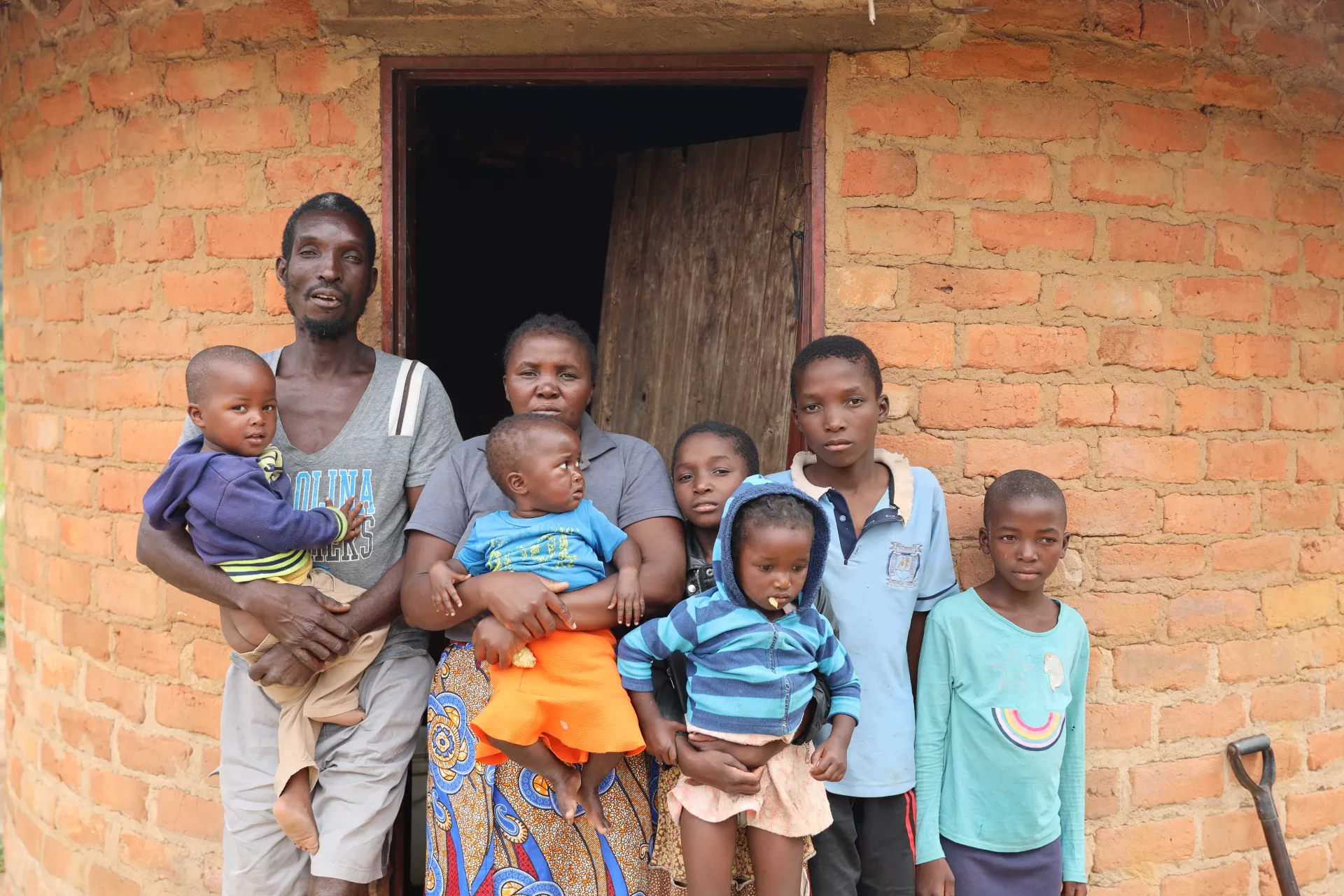
Zimbabwe, Bikita—Over the years, Hamunyari Mavhiki has depended on subsistence farming to support her household including her six children.
Due to El Nino, Bikita District received very little rainfall and the 39-year-old Hamunyari has placed her hope on interventions being implemented by Unicef and the Government of Zimbabwe.
Considering the food insecurity in many households, particularly the vulnerability of children, Unicef, supported by CERF, is scaling up the usage of Mid-Upper Arm Circumference (MUAC) measuring tapes for early identification of malnutrition and to mitigate child morbidity through referral and quality treatment of children with wasting.
Hamunyari reveals: “I am taking care of these children’s needs the best way l can, but things are not looking good this year. I am not expecting any harvest from my fields due to the poor rains.
“My 20-year-old daughter is the mother of the mother of the two youngest children l am looking after. She and her husband moved to Masvingo in search of greener pastures, but unfortunately, they are not sending anything to help me with the children’s welfare,” she said.
Her husband, Andrew Mlambo, chipped in: “The Government of Zimbabwe, through the Department of Social Welfare, recently came to our rescue. Last month, we received 40kg of grain, and I am sure that will take us through the entire month.”
With an estimated 2.7 million people in Zimbabwe, including 1.7 million children, expected to be food insecure in 2024, Hamunyari’s tale is just one of many similar cases.
The El Nino phenomenon has disrupted rainfall, leading to prolonged dry spells and higher-than-average temperatures during the 2023/24 season. This has significantly affected food and water security.
These challenges come at a time when Zimbabwe is also responding to a cholera outbreak, potentially leading to a severe crisis for children.
MUAC screening of children aged 6 – 59 months for wasting.
In coordination with other UN agencies and the Ministry of Health and Childcare, UNICEF is screening children for acute malnutrition through the help of village health workers and the capacitation of mothers.
Every child is screened monthly using a colour-coded MUAC tape from six months until the age of five.
If the tape measure falls in the red zone, the child is severely wasted and requires immediate treatment. Yellow indicates moderate wasting, while green shows that the child is wasted growing well.
Once a reading indicates malnutrition, the child is immediately referred to a medical institution for treatment using ready-to-use therapeutic food (RUTF).
At Chikuku Rural Hospital in Bikita, Sister Manjange said they receive monthly records of the children’s MUAC readings from the village health workers.
There are 88 children under the age of five in her area.
“While we have not recorded any cases of malnutrition waste this month, those MUAC readings assist us in identifying the areas that need assistance before the children start wasting. UNICEF is assisting us with multiple micro-nutrient powders, and these are saving a lot of children during this period when most families are food insecure,” she said.
Decreased access to clean water and a poor diet heighten the risk of malnutrition and diarrheal diseases among children.
Collaborative work
Hamunyari is a mother of four minor children aged between three and 14.
She is also grandmother to a 21-month-old baby and another one who is 27 months old.
Today, she is waiting for a village health worker to access five children.
It is noon, and the family’s first meal of the day is boiled peanuts and corn.
“I am happy that this is taking place. It helps ensure that the health of these children is at the top of everything we do,” Hamunyari said.
In Gwirandaseka, Bikita, a total of six village health workers are working under the supervision of Sarah Chikurika to actively screen all the children under five years old every month.
The village health workers also educate pregnant and lactating mothers on the importance of a balanced diet for themselves and their children.
Sarah said, “Every month, our team of village health workers conducts active screening. We also take the opportunity to discuss healthy ways of feeding children, including exclusive breastfeeding and maintaining a balanced diet. This area has a huge demand for micronutrient powders as most households are food insecure.
“We are encouraging locals to establish gardens and orchards, but our water sources are seriously letting us down since they often dry up in August. With this year’s EI Nino, the water situation is already dire. We worry about our children because we do not have enough safe drinking water,” said Sarah.
Addressing nurses and environmental health practitioners during a capacity-building workshop in Bikita, UNICEF Nutrition Officer Vengai Taremba called for the scaling up of early identification of wasting in children.
“As UNICEF and the Ministry of Health and Childcare, we need to push for behaviour change in the communities so that the children are religiously brought in for MUAC screening, immunisation and Vitamin A supplementation,” said Taremba.
Research has estimated that a child who is severely wasted experiences a risk of death up to 12 times higher than a child who is not malnourished, while a moderately wasted child faces three times the risk.
Source: unicef.org


Mash East woos investors in Mozambique

ZCTA re-engineers Zim’s corporate, grassroots development ecosystem

Official Announcement: ZCTA 6th National Edition Call for Nominations

-
 Community Feedback Page2 years ago
Can real estate agents, developers be councillors?
-

 Health and Wellness3 years ago
Leaked nudes: Traumatic impact, healing pathways
-
 Tourism3 years ago
Antelope Park joins White Rhino fight
-
 Breaking News2 years ago
Zim Community Trailblazers Awards (ZCTA) Call for Entries (5th Edition)
-
 Breaking News2 years ago
Mnangagwa approves Starlink Zim operations
-

 Entertainment5 years ago
Charambas ZCTA maiden winners
-

 Faith3 years ago
Byo woman walks after 27 years
-
 Tourism3 years ago
White Rhino grazing at Zim’s biggest private game reserve