
Comment
Chitown service delivery takeaways


WE thank all our stakeholders in making this dream a reality.
Perfection Media (Pvt) Ltd got the nod to publish Dungwiza News some years ago. We are a licensed community media house that seeks to empower communities through solution-based journalism.
Our publication covers Chitungwiza, Seke and Manyame areas.
Our focus today is on Chitungwiza.
Quality service delivery in Chitungwiza can only be realised through strong public institutions in the health, energy and government sectors that also recognise the residents as key actors in decision making.
Good local governance is founded on principles such as transparency, participation, effectiveness, and accountability.
The Constitution of Zimbabwe recognises the right of communities to manage their own affairs and further their development.
However, the lack of transparency, accountability, and responsiveness among elected leadership and management at Chitungwiza municipality has seen limited access to basic services and the deterioration of service provision in our communities.
However, a glimmer of hope came through during the recent full council meeting held at Council Chambers when the mayor and her councillors took a tougher stance by taking senior management to task over poor service delivery.
By right councillors being the mouth piece of residents must ensure that community members interests are included in the decision-making process, They express residents needs and aspirations, and hold local officials accountable for their actions.
Accountability can take the form of discussions and inquiries to understand the reasoning behind specific decisions.
Feedback meetings for residents have been an eye-opener for councillors. At such meetings residents have expressed their grievances and held those responsible accountable.
In that light our role as a community newspaper for Chitungwiza is for us to play a crucial role in good local governance by providing citizens with a means to express their desires and improve the quality of public services.
Through us media, residents can voice their concerns and pressure local officials to address their demands for better local services.
The development of media aligns with plans for sustainable development at national levels, and this requires that the media plays an active role in development.
While urban councils may differ in their resources and capabilities, they should all strive to improve communities by meeting the needs of residents.
We need to stress that development is a collaborative effort involving the government, citizens, and civil society, each with their assigned roles.
In that light we commend the work of residents associations but advise them not to sink into the basher-mode as they strive to seek relevance.
Given the complexity of the challenges facing Chitungwiza, it is essential to have an effective and influential media that actively contribute to shaping ideas, presenting opinions and information, We will not shy away from guiding society’s behavior in line with central and local government’s development policies.
However our role in supporting such development depends on accurate information about development plans, addressing citizen needs, and promoting their interests
We implore all stakeholders to respect the media’s role and not pursue selfish agendas.
Certainly the role of councillors is not that of a real estate agent and should not even be perceived to be such, lest they become conflicted and become de facto land barons in the eyes of the public.









Comment
Zanu PF Chinhoyi 2026: Constitutional order vs. Grassroots results
If ZANU PF translates its consolidated political roadmap into localised, measurable socio-economic results—ensuring accountability, infrastructure durability, and economic empowerment—the resolutions passed at Chinhoyi University of Technology will mean genuine progress for the Zimbabwean public.
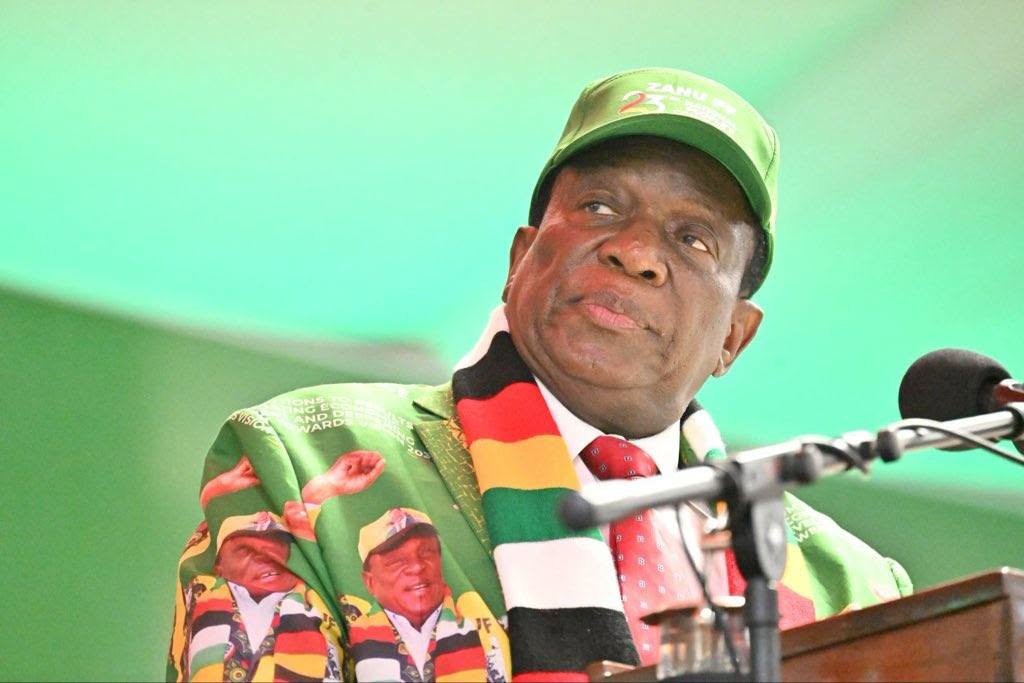
As the ruling party since independence in 1980, ZANU PF’s internal dynamics are never just party matters; they have a direct, heavy bearing on the daily lives of ordinary communities.
When the party sneezes, the whole nation catches a cold.
Therefore, the outcomes of the party’s 2026 Chinhoyi conference warrant close, community-centred analysis.
On April 28, 1966, seven ZANLA fighters held off a Rhodesian force at Hunyani River.
ZANU PF marks it as the first shot of the Second Chimurenga.
Sixty years later, the party returned to Chinhoyi University of Technology for its 23rd National People’s Conference with a theme that is now more than a slogan: “From Resolutions to Results: Consolidating Economic Development and Deepening Economic Empowerment Towards Vision 2030.”
In his keynote address, President Mnangagwa took the opportunity to reflect on the significant milestones achieved by the Second Republic since he assumed office.
He aggressively defended his administration’s track record, pointing to major domestic breakthroughs in food security through revitalised climate-proofed agriculture, massive infrastructure rehabilitation projects like the Harare-Masvingo-Beitbridge highway, and an unprecedented expansion in mining output.
Crucially, the President anchored his address on the visible gains of his foreign policy doctrine: “Friend to all and enemy to none.”
He highlighted how this diplomatic re-engagement strategy has successfully unlocked critical economic partnerships have broken years of diplomatic isolation.
For ordinary communities, these are not just abstract international trips.
The President emphasised that this shift has directly driven foreign direct investment into local lithium mining, consolidated heavy industrial manufacturing, and opened fresh export markets for Zimbabwean agricultural produce.
By positioning Zimbabwe as an active, pragmatic global partner, the administration argued that it is actively building the macroeconomic foundation necessary to sustain local livelihoods.
Yet, inside the conference halls, the political trajectory required equal focus.
In one morning, the party leadership gave the nation two speeches that, if read together with maturity, give ZANU PF a cohesive way forward.
President Emmerson Mnangagwa, as President and First Secretary, gave direction and discipline:
“MuZANU PF hamudi zvemazvake mazvake. Tinofanira kufamba tose, takabatana uye tiine gwara rimwe. There is no room for solo efforts or dividing our focus – neither lagging behind nor running ahead out of step.”
Vice President Rtd General Dr Constantino Chiwenga, gave reflection and conscience:
“Chii chakaita kuti Second Republic ivepo? Kwaive kugadzirisa zvakaipa zvanga zvichiitika kumashare. Hatisi kudzokorora here kuita zvatakambotadza? Change is inevitable. It must be orderly, entrenched in our party structures and guided by our Constitution. Change must be driven by the people, not imposed from above. You may recall, Your Excellency, that the voice of the people is the voice of God.”
Together, they answer four questions Zimbabweans are asking: the history of how we got here, the whispered 2017 promises of structural corrections, and the constitutional path forward regarding succession.
The final political outcomes of the conference effectively answered Vice President Chiwenga’s insistence on an orderly, legalistic approach before the resolutions were even set in stone.
By passing a consensus resolution to defer the elective congress from 2027 to 2029, the party avoided the chaos of abrupt factional re-alignments.
Instead, delegates chose to align internal party structures directly with the Constitutional Amendment Act Number 3 (CAA3), extending President Mnangagwa’s leadership tenure to 2030 through legal mechanisms rather than ad-hoc decree.
In addition, the official decision to extend the internal electoral cycle from a five-year to a seven-year term provides a predictable framework from the cell level up to the Central Committee.
This structural change satisfies the demand for order and constitutional discipline, ensuring that change is not a disruptive shockwave but an institutionalised evolution.
Crucially, the way these outcomes came about directly addressed Chiwenga’s warning that change must be driven from below rather than imposed from above.
President Mnangagwa took the stage to defend the intense internal friction and divergent views that characterised the lead-up to Chinhoyi.
Rather than dismissing these competing provincial interests, the President described open internal debate as healthy for party unity and progress.
By allowing these passionate debates to play out transparently across the party structures before adopting a common consensus, the leadership demonstrated a commitment to letting the grassroots voice speak.
This acknowledgment of divergent views signals that the party recognises the risk of top-down imposition, choosing instead to anchor its decisions in the collective will of the structures.
For our local communities, the true test of Chinhoyi 2026 lies in whether this orderly political roadmap can translate into tangible performance, mirroring the conference theme.
While the conference generated short-term economic booms for Chinhoyi’s local hospitality, transport, and informal trading sectors, the lasting impact must be measured by enduring grassroots development.
The concurrent commissioning of a new oxygen plant and a solar power system at Chinhoyi General Hospital, alongside upgraded student accommodation at the university, serves as a template for what community impact should look like.
Beyond politics, the economic resolutions passed at Chinhoyi hold massive implications for ordinary citizens.
The party issued strict directives to expedite the issuance of offer letters and title deeds to resettled farmers, a move that could unlock crucial agricultural credit lines and boost local food security.
Simultaneously, directives to enforce the “use it or lose it” policy on mining claims and to accelerate localised mineral beneficiation mean that communities surrounding resource-rich areas could finally see corporate social responsibility turn into real local employment and infrastructure development.
However, the local community remains wary of the implementation gap.
If ZANU PF translates its consolidated political roadmap into localised, measurable socio-economic results—ensuring accountability, infrastructure durability, and economic empowerment—the resolutions passed at Chinhoyi University of Technology will mean genuine progress for the Zimbabwean public.
If not, the community risks being left behind by an establishment more focused on positions than actual production.
The mandate is clear: the speeches have been synthesised, the constitutional timeline is set, and the community now awaits the delivery.
GLOBALLY, there is now an increased demand for transparency and accountability in the use of public resources allocated and disbursed to lower tiers of government.
Inevitably, the easy accessibility and user friendliness of such information from local authorities determines the quality and depth of their stakeholder engagements.
In addition, timeous sharing of relevant information facilitates informed decision making and oversight by stakeholders.
Guided by the above, we recently sought information from Chitungwiza Municipality on the current costs of the master plan implementation process and the valuation roll exercise.
We also wanted to know how far they had gone in the implementation of both exercises.
The answer from the responsible council official is the subject of this editorial.
Our editorial is anchored on the premise that our government and local authorities, are the principal custodians of the well-being of the residents through their provision of public and infrastructural services.
The Chitungwiza official told us without mincing his words that our enquiry on Chitungwiza was misplaced because no one knows what other local authorities are paying for the valuation roll.
Just like that, plain and simple.
Talking about precedence, was this not the same council that publicly stated that Chitungwiza needed around US$600 000 for its master plan.
Was it not their official who told residents during the recent master plan stakeholder engagement exercise that the figure could rise above the $600 000?
Is it not the same council that declared itself broke and sought a partner to fund the master plan to the tune of the above figure?
Curiously, that same council had dumped a consultant who was the sole bidder for the master plan.
In an about turn, the same council reverted to the sole bidder following disagreements with the proposed funder.
All of a sudden the figure for the master plan costs nosedived to $180 000 only to rise to the $190 000 that was settled with the new lead planner.
In such a situation residents and the media can’t be said to be crazy in seeking answers from Chitungwiza.
Community based organisations can also demand the local authorities to account for the financial resources used.
These CBOs have responsibilities of setting Chitungwiza’s development agenda and can also demand to be given feedback about the progress of projects being undertaken by the local authority in question.
In simple terms the successes, failure and or delays in taking off of various projects should be reported to stakeholders.
In that light, the stakeholders have a right to know who is funding the master plan for the broke municipality and why all of a sudden the figures have changed or continued to change.
As the media,we need to question the extent to which fiscal transparency and accountability principles are being adopted by Chitungwiza council.
We will trigger conversations on the role of fiscal transparency and accountability in achieving the national objectives.
In that respect, to what extent, if any is Chitungwiza conforming to the existing legal and institutional frameworks that are expected to foster transparency and accountability, we rightfully ask
This assists all stakeholders to draw lessons from each other’s experiences on how to improve fiscal transparency and accountability.
We are reliably informed that the government has intervened to resolve the crisis at Chitungwiza by funding the master plan.
We welcome such a development and with it comes increased demand for transparency and accountability in the use of public resources allocated and disbursed to lower tiers of government.
In order to facilitate deeper citizen engagements Chitungwiza needs to make a distinct break with the past where other stakeholders had little or no access to information on public financial management.
Research has shown that transparency and accountability are interrelated and mutually reinforcing concepts without which it would be difficult to call public sector entities to account.
It has been noted that Zimbabwe has the necessary policy framework including our Constitution, the Zimbabwe Finance Management Act and Urban and Rural Councils Acts which are expected to foster transparency and accountability.
However, the main challenges are on the implementation and enforcement of the provisions of these legislative frameworks.
This has been the reason why adverse issues and irregularities noted by the Auditor General’s reports including recommendations to address these anomalies have not been addressed by the respective public entities.
There is need to accelerate the roll-out of the financial management information system to local authorities to enhance transparency and accountability.
Dogged enforcement of the constitutional and legal provisions in respect of financial reports, internal controls and audits is therefore critical.
Best practices on transparency and accountability policies and practices should also dovetail with the national context, policy priorities and strategic actions to be taken.
In this regard, we call upon Chitungwiza municipality officials to increase the levels of transparency and accountability in order to enhance the successful implementation of both the master plan and valuation roll.


Takesure Zamar urges Zim to storm historic ‘night of favour’

From Zim to Westminster: Rev Maloba is rewriting UK migrant care, work justice rules

Why Zimbabweans must stop cursing their own soil


-
 Community Feedback Page2 years ago
Can real estate agents, developers be councillors?
-

 Health and Wellness3 years ago
Leaked nudes: Traumatic impact, healing pathways
-

 Tourism3 years ago
Antelope Park joins White Rhino fight
-

 Breaking News2 years ago
Zim Community Trailblazers Awards (ZCTA) Call for Entries (5th Edition)
-
 Breaking News2 years ago
President Mnangagwa approves Starlink Zim operations
-

 Entertainment5 years ago
Charambas ZCTA maiden winners
-

 Faith3 years ago
Byo woman walks after 27 years
-

 Breaking News2 years ago
Fly Emirates To Dubai This Summer and Unlock Exclusive Offers Including Access To The City’s Most Exciting Experiences